Does Ontario require a licensed plumber and electrician for a bathroom?
Yes, for both trades. Plumbing is a compulsory trade in Ontario, so drain, vent and supply lines need a certified plumber or a registered apprentice. Only a Licensed Electrical Contractor, or an electrician employed by one, can be hired to do the wiring. On our bathrooms, both are our own licensed staff.
Can an ensuite be added to a bedroom?
Yes, where its drain can reach the house's existing drain lines. That decides where the ensuite fits, often more than how much floor the bedroom can spare. If a wall has to come out to make room, Ontario advises checking that whoever prepares the permit drawings is registered on its QuARTS public registry.
Why does a basement bathroom mean cutting into the floor?
Its drains usually have to run under the concrete slab to reach the main drain. The cut, the length of the trench and the patch afterwards are what move the cost, so a bathroom close to the main drain costs less to plumb. Where the house drain runs above the basement floor, a macerating pump takes the place of the trench.
What is the difference between a bathroom refresh and a full remodel?
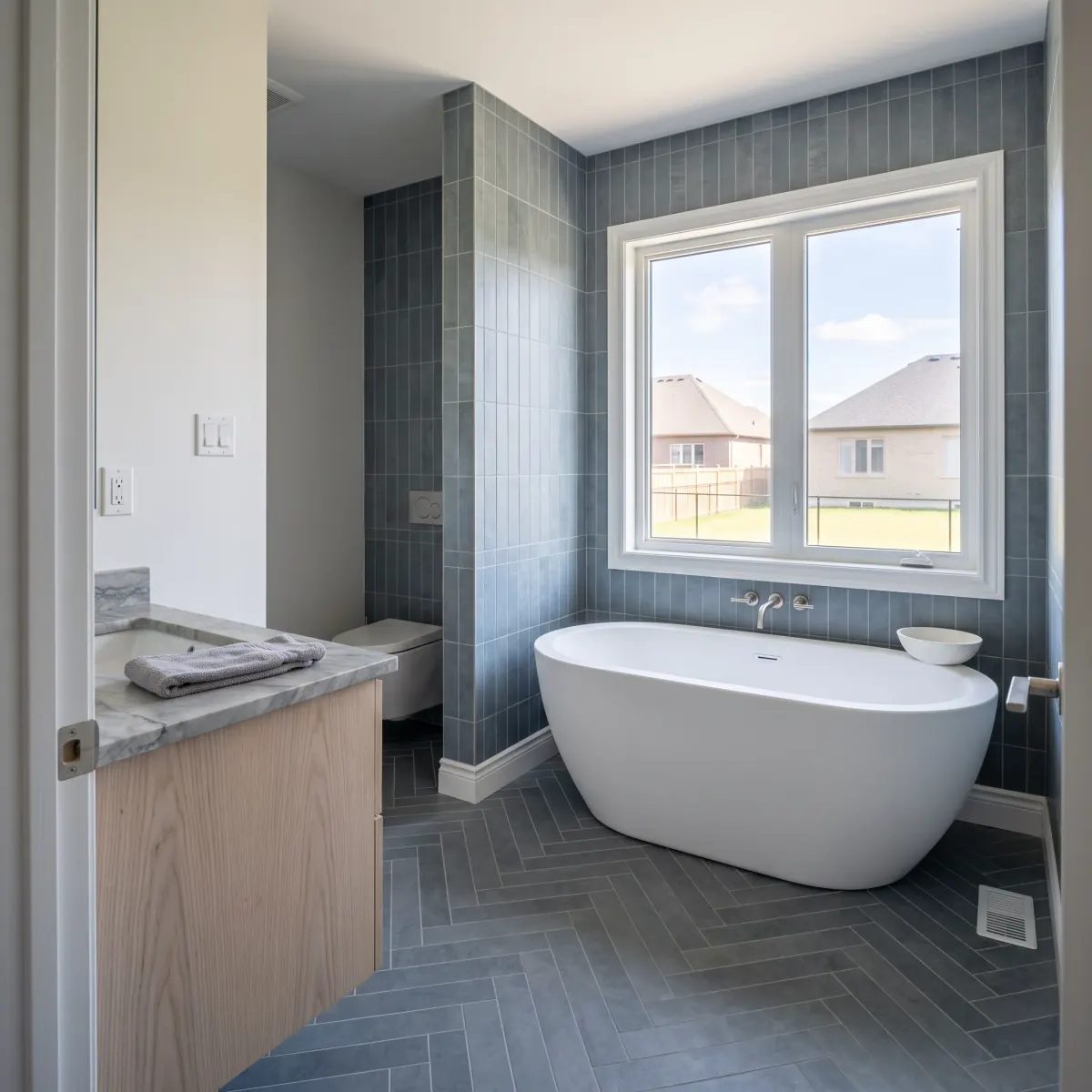
A refresh keeps every fixture where it is and replaces the vanity, toilet, taps, lighting and finishes. In a full remodel the room comes down to the framing, so the layout can change and the shower gets new backing and a new membrane. A refresh suits a layout that already works. A remodel is the time for a heated floor or a bigger shower, while the room is open.
Which choices keep a bathroom remodel on budget?
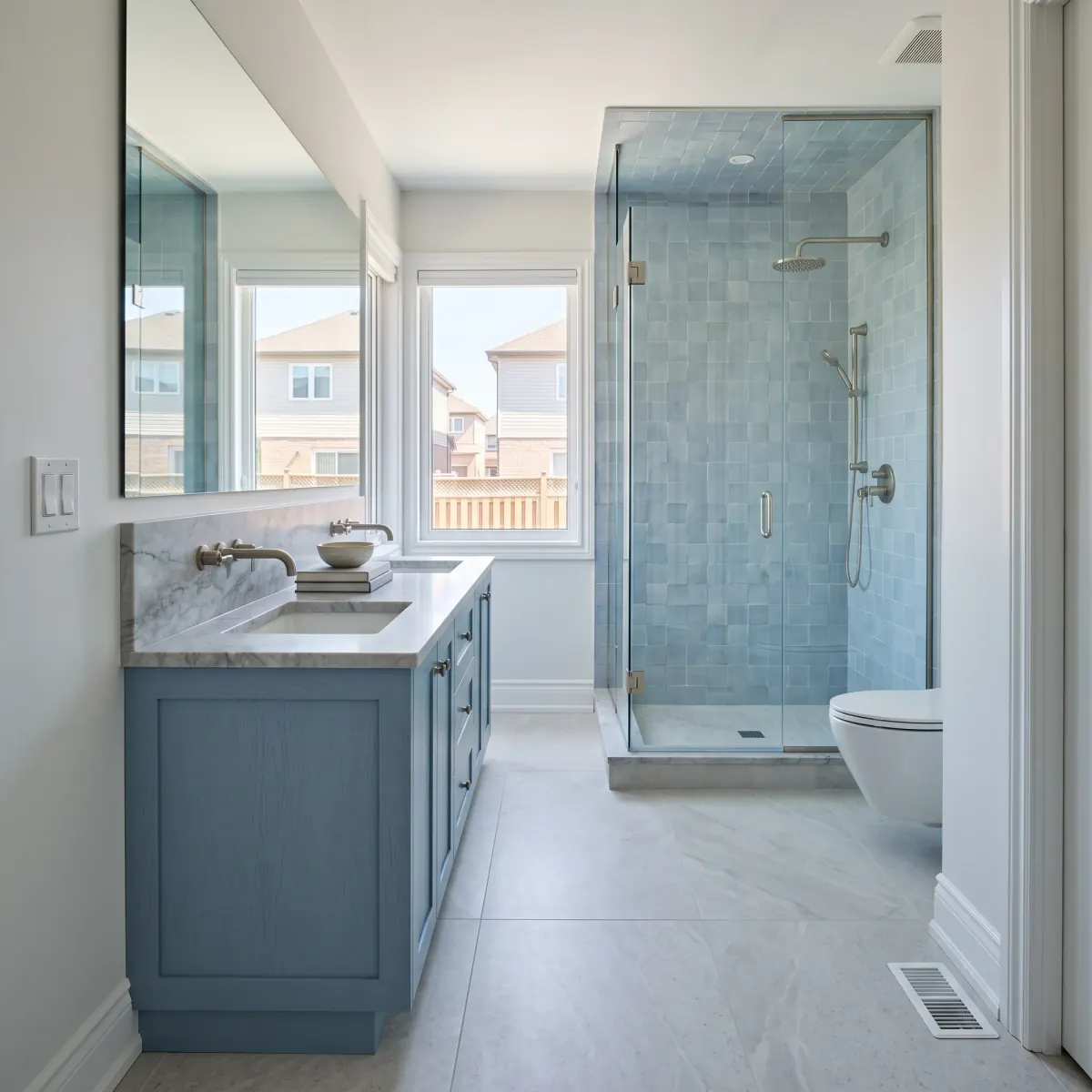
Start with the tile area: tiling the wet walls and the floor and painting the rest uses far less tile than covering every wall. Custom glass, a rainfall head, body jets and a heated floor are each priced separately in the itemized quote, so the homeowner can weigh them at the selection step, inside the agreed number, before anything is ordered.
What order does a bathroom remodel go in?
Demolition comes first, then the rough-in, when new pipes, wiring and boxes go in while the studs are bare. Once the rough-in passes its inspections, backer board and the waterproofing membrane go up, then the tile, then the vanity, toilet, taps and glass. Paint is the last coat.
Can a shower be made bigger without moving its drain?
Often, if the larger floor can still slope to the drain where it is. The new shower pan or tiled floor is pitched toward that drain, and the waterproofing then has to cover the whole enlarged wet area before tile goes on. Custom glass closes the wider opening once the tile is done.
Can pot lights go inside a shower?
Yes, if the fixture is rated for it. Ontario's Electrical Safety Authority says shower lighting must be marked suitable for wet locations on the package and on the light itself. Shower pot lights are picked from rated products before the order goes in, and the circuit is filed with the rest of the bathroom wiring.
Can new tile go over the old bathroom tile?
Not in the shower or around the tub. Those walls get a Schluter or Laticrete membrane under the new tile. It needs sound backing, so the old tile comes off and the wall behind it is checked first.